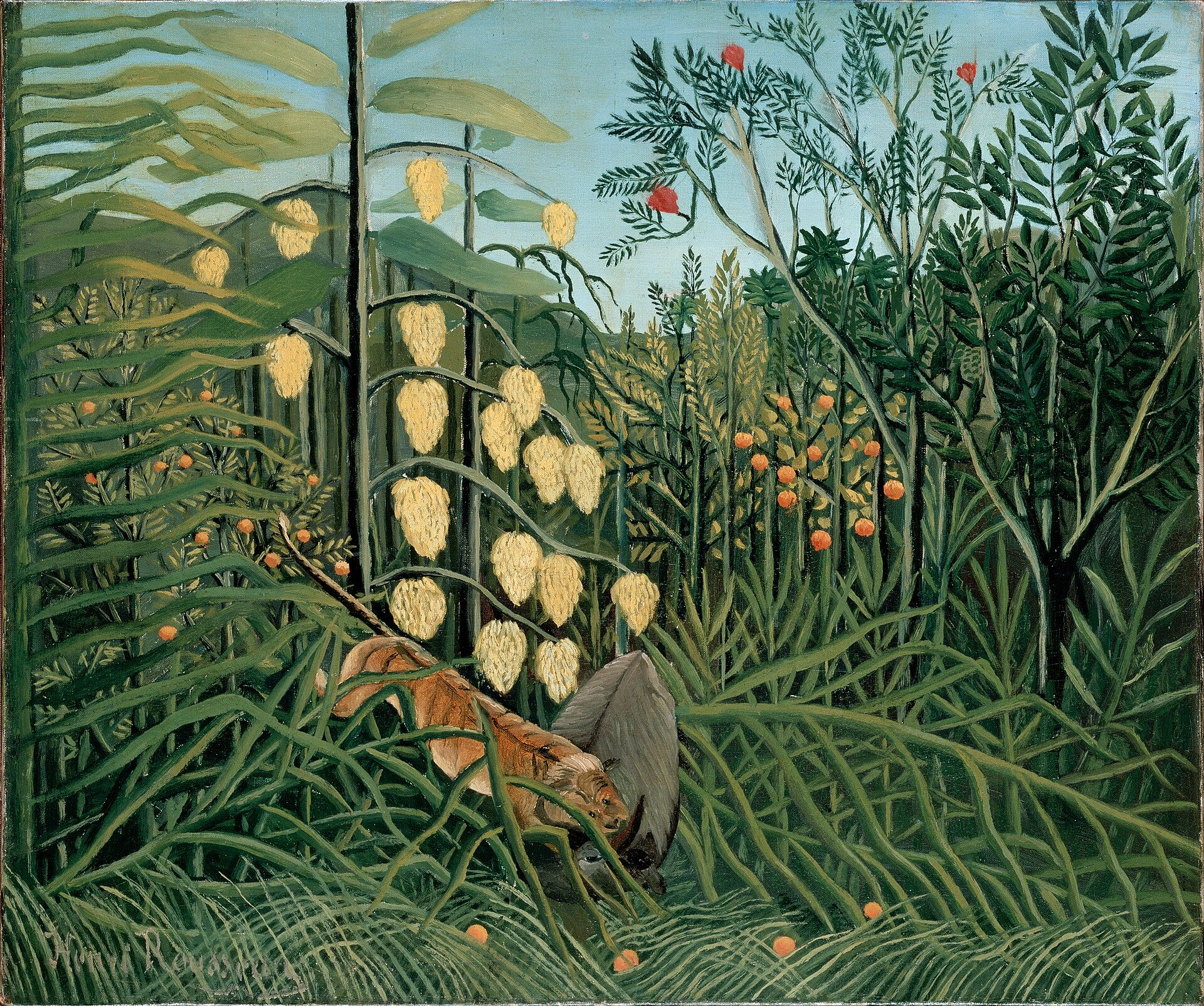
Crazy-Eyed Tigers
D.W. Winnicott, Henri Rousseau, and living creatively

I’ve been reading essays from British psychoanalyst D. W. Winnicott, a longtime favorite of mine, that were adapted from various talks he gave over his career, from a collection titled Home is Where We Start From.
One of them has captured my attention, a talk called Living Creatively. As a poet, and a person who’s forever been drawn toward the visual arts—a study to which I mean to get back in a disciplined way—and then also someone who’s been steeped in wine culture for a good 15 years, creativity is a subject that’s been of serious interest all my life.
For those of us that consider ourselves creative, or maybe that deeply dreaded word, an artist, do you remember the moment where you became conscious of this yearning or attribute? I do. It’s a twofold memory: the first belongs to kindergarten, where I remember a dark art room which we’d visit once weekly—the windows were horizontal 70’s style and let in very little light. For maybe a week, our teacher showed us images from Henri Rousseau, his jungle paintings. I still remember my initial impressions, which makes them among my earliest memories: the crazy-eyed tigers and lions, densely packed compositions, high contrast between dark and light, strong streaking lines created by all those plants. Of course, I was five, I had no language for any of it, but I distinctly remember feeling something inside; these mysterious pictures were important.
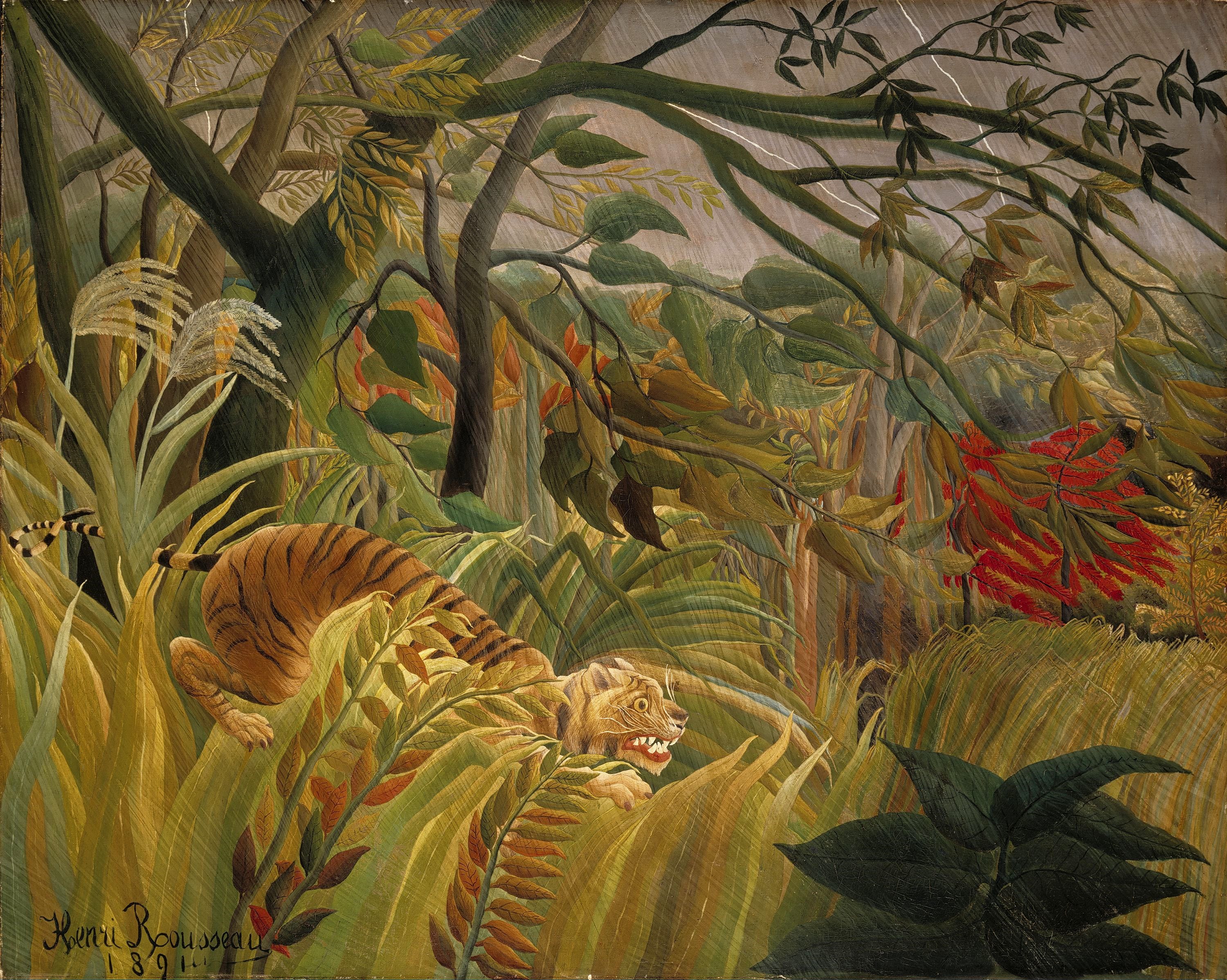
Rousseau was ridiculed during his lifetime. He worked as a customs collector in the Parisian ’burbs and was a “hobbyist” painter, but he took it rather seriously. He had no knowledge of perspective, no formal training as an artist, and lied about having been to Mexico (in fact, he’d just made friends with some French soldiers at his customs job who actually had been to Mexico on military expeditions). Perhaps this is why a child might respond to his works strongly; they require little formal understanding or thinking about technique to encounter. Rousseau was a regular visitor of Paris’ botanical gardens, looked at taxidermied animals, and studied illustrations in children’s books. As someone who considers the Brooklyn botanical garden and the New York botanical garden in the Bronx among my favorite places in the city, I sympathize with Rousseau on this point: maybe the bonsai room at the BBG is the closest I’ll get to Japan in my life (but maybe not!).
Leaving aside the tawdry fact of colonialism and exoticism that are clearly the milieu in which these paintings emerged, I do think about Rousseau getting started as a painter at 35, making the bulk of his work in his 40s and 50s. Our culture is so hot on the young people who do things—all these “30 under 30” lists—when you can only really be talented at that point, but not experienced or deeply practiced. I say this as someone who published a first collection of poems at 27—maybe a third of it I still find interesting, but two-thirds of it I’d toss, like many poets who disavow their first books. Most of this is because the work was still practice, figuring out what I was making and what of it was good. Winnicott draws a difference between intellect—which can be just a brain-in-a-vat sort of thing—and wisdom, which can only belong to the full human being, both psyche and soma. “It is the human being who, by an accumulation of experiences duly assimilated, may achieve wisdom. The intellect only knows how to talk about wisdom.” Then he quotes Ecclesiastes.
The second memory I have of being aware of wanting a creative life came just a few years later, at eight years old, again in school. It was one of those moments where kids must answer the question, “What do you want to be when you grow up?” This is a terrible thing to ask children; it immediately insists that occupations are somehow the goal of getting bigger and older. That fulfillment of self is identical with a job. What a nightmare. I do recall a friend whose answer to that question at about five years old was “a fire truck.” Good on him—dream bigger. My answer, at eight, was “an artist.” We had to practice writing our answer and draw a picture above the words, illustrating ourself in this imagined role. I drew myself wearing a beret, with a paintbrush and an easel. On the canvas sitting on the easel, I drew an ice cream cone stacked with a dozen scoops or more, each one colored differently: a drawing within a drawing. I guarantee I’d never seen a real artist’s easel or anyone wearing a beret. Where did any of that come from?
One of the first critics to actually praise Rousseau’s paintings famously said, “There is always something beautiful about seeing a faith, any faith, so pitilessly expressed…” Standing out of the way of ego, just being utterly sunk into your weird little thing. Wanting to be absorbed by something generative and strange, by mad-eyed tigers, repeating ferns, streaking rain.
One pleasing thing about Winnicott here is that he makes a distinction between creative living and artistic creation. The latter, he claims, is for people who are particularly engaged in a cultural practice: “letter writers, writers, poets, sculptors, architects, musicians…” But he says that creative living is universal, and not only is it available to everybody, but that we need it, far more than, he says, eating or physical survival. So what is creative living? He describes it as a matter of sight: being able to see your surroundings as new. “By creative living I mean not getting killed or annihilated all the time by compliance or by reacting to the world that impinges; I mean seeing everything afresh all the time.” Winnicott also says it has to do with being able to surprise oneself, whether cooking sausages or mopping the floor or looking at a tree. I, for example, know those people totally incapable of seeing anything as interesting or new, where to them the world is flat; their town, their job, their spouse or partner all suck. John Berryman: “Life, friends, is boring. We must not say so.”
Winnicott again: “The fact is that people must not take jobs that they find stifling – or if they cannot avoid this, they must organize their weekends so as to feed the imagination, even at the worst moments of boring routine. … Somewhere in the scheme of things there can be room for everyone to live creatively. This involves retaining something personal, perhaps secret, that is unmistakably yourself.”
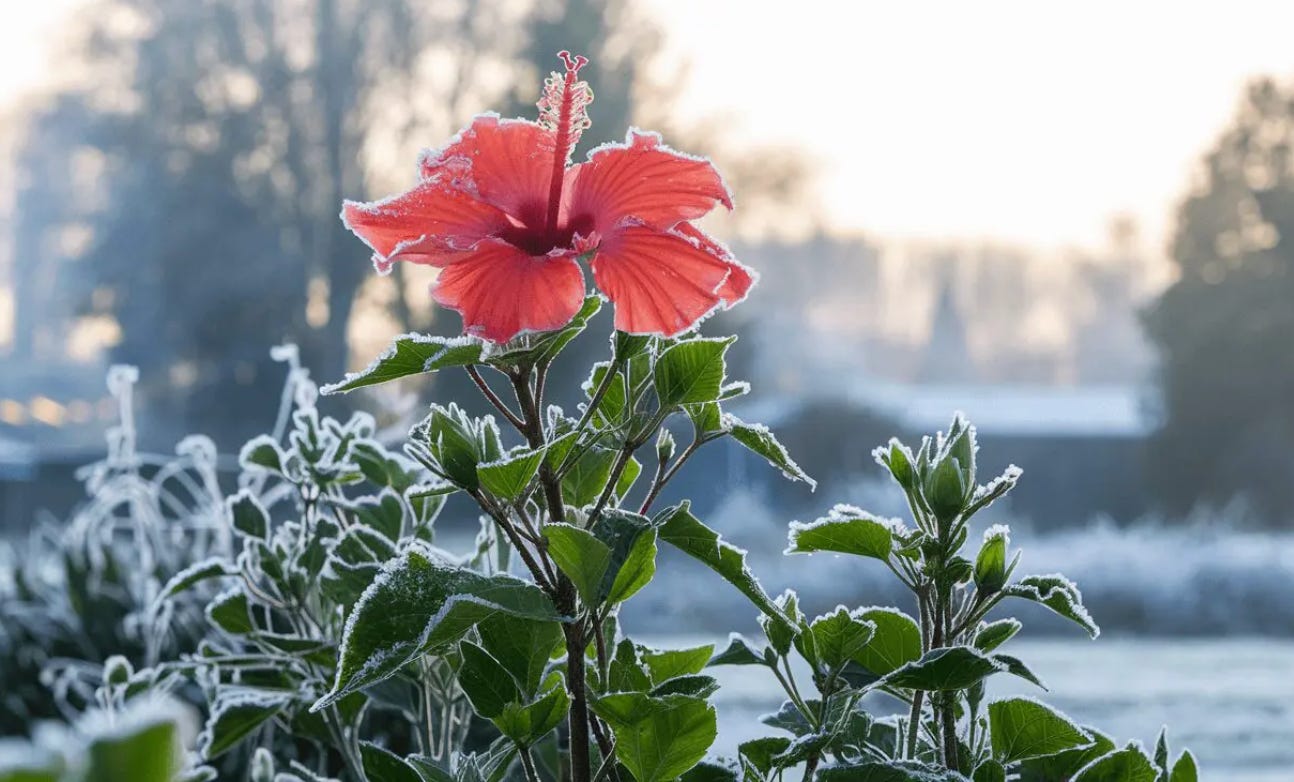
Obviously one of the central problems of our culture’s screwed-up way of things is that we’ve forced entire swaths of the world into miserable or soul-crushing jobs, bullshit work, or outright exploitation. But one way to build up an internal resistance to all of this, perhaps, is to fiercely work on something for yourself that nobody can do for you or take from you. I imagine that’s why it’s so nice meeting someone with an odd little obsession. Like the district attorney I knew who kept multiple hibiscus plants, despite they fact that they were deeply wrong for his Wisconsin climate. He spent a lot of time and somewhat absurd effort moving them about into various spaces to make sure they’d survive the winters or shoulder seasons.
Or the poet I know in Mississippi who has a consistent, years-long photography practice, despite the fact that it’s not what earns him money or keeps him in a professorship or gets his writing any attention. Or, in fact, the vignerons I know and love—the best among them spend truly uncountable hours tending plants by hand and also the surrounding land, in order to get vibrant, healthy fruit; this in order to be able to get fermentations that are somehow expressive of both environment and also their ideas about that fruit and environment. All of this is creative life, when we make room both to see things anew and also to surprise oneself in a practice.
Winnicott’s notion that the creative impulse is universal is something I’ve believed instinctively all my life—and that one need not be an artist or a cultural practitioner of that sort in order to stay really alive, in this fundamentally human way. He says that, as the infant quite literally creates the world around herself, because her experience is wholly subjective and knows nothing of self/other or inside/outside, we are to retain a sense as we get bigger and older of being able to create the world. “Happy is he or she who is being creative all the time in personal life as well as through life partners, children, friends, etc. There is nothing that is outside this philosophical territory.” We have to cultivate space where we can be as naïve and convicted as Rousseau. Even if it’s only expressed in what we do with our relationships, our plants, or our weekends.